A home energy audit is a professional evaluation of how much energy your home uses and where it’s wasted. In Canada, a registered energy advisor completes it and you receive an energy certificate, usually an EnerGuide label, along with a report of recommended upgrades. It’s the smartest first step before an energy renovation, and useful when buying or selling.
Key takeaways
- An audit gives you an official rating and a prioritized upgrade list.
- A registered energy advisor runs a blower door test and inspects the home.
- Many rebate programs require audits before and after upgrades.
- Preparing ahead makes the visit faster and more accurate.
- A DIY check is useful, but it can’t replace a professional rating.
What is a home energy audit?
An audit looks at your whole home as a system. The advisor checks how well it holds heat, how much air leaks in and out, and how efficient your heating, cooling, ventilation and hot water equipment is.
The result is your home’s “energy certificate.” In Canada, that’s typically an EnerGuide label showing estimated yearly energy use in gigajoules, compared with a reference house built to code. Our post on the EnerGuide rating explains how to read the label.
What happens during the audit
- Booking: you book a registered energy advisor through a licensed service organization.
- Walk-through: the advisor measures the home and inspects the attic, walls where possible, basement, windows and doors.
- Equipment check: they record the make, model and age of your furnace, heat pump, air conditioner, water heater and ventilation.
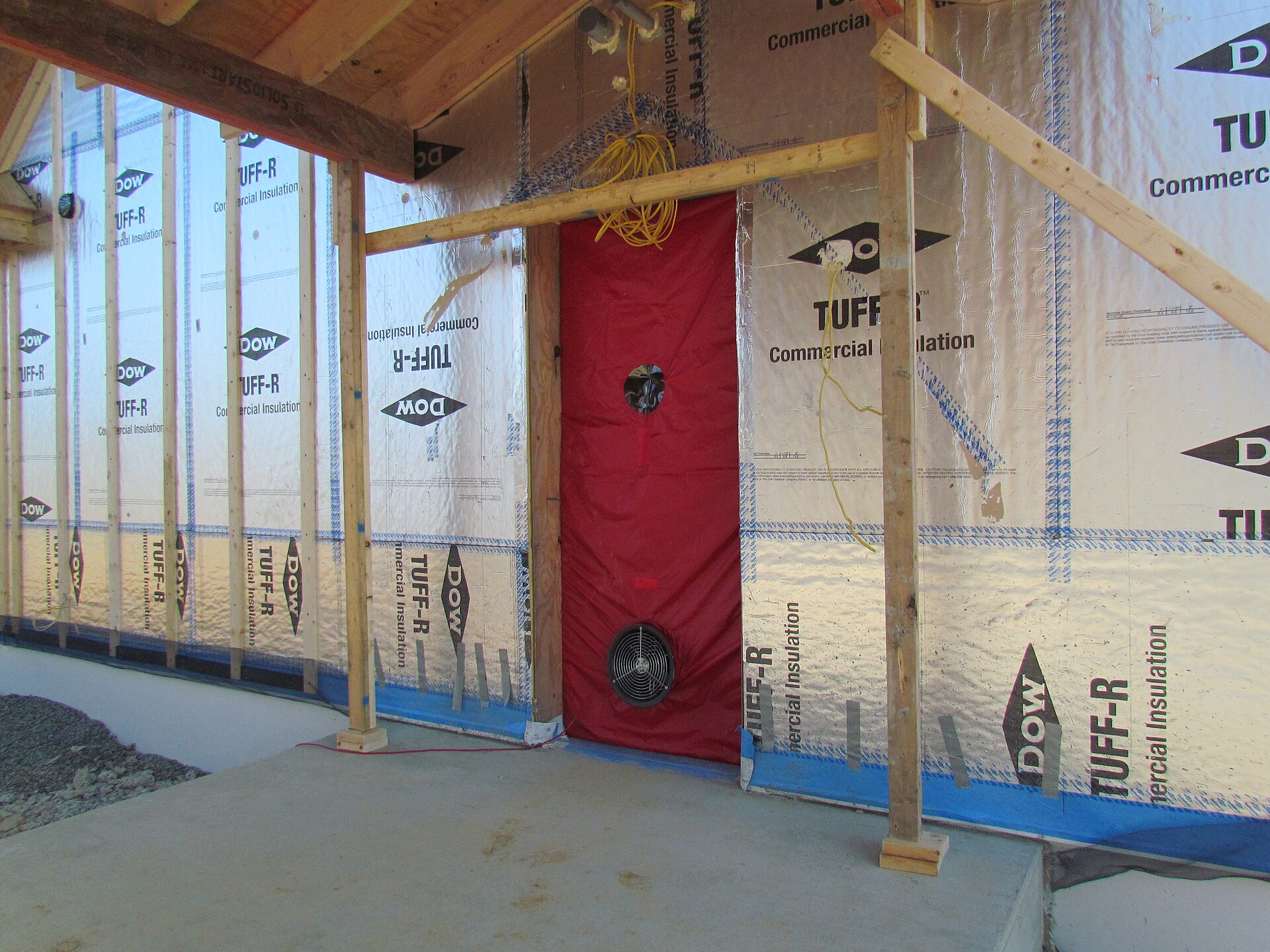
- Blower door test: a powerful fan is fitted to an exterior door to depressurize the house and measure air leakage. The advisor may use smoke pencils or an infrared camera to find leaks.
- Modelling: software calculates your rating.
- Report: you receive your label and a list of recommended upgrades.
A typical visit takes a few hours. Costs vary by provider and home size, so get a quote when you book.
What your audit report includes
| Section | What it shows | Why it’s useful |
|---|---|---|
| EnerGuide rating | Estimated yearly energy use in GJ | Benchmark to measure improvements |
| Reference house comparison | How your home compares to a code-built new home | Shows how much room there is to improve |
| Air leakage result | How leaky the home is | Guides air sealing work |
| Energy use breakdown | Heating, hot water, other uses | Shows where the money goes |
| Upgrade recommendations | Suggested improvements and their estimated effect | Your renovation to-do list |
How to prepare for your audit
- Clear access to the attic hatch, furnace, water heater and electrical panel.
- Close all windows and exterior doors, and open interior doors.
- Have recent utility bills ready.
- Gather any records of past upgrades, like insulation or window receipts.
- Put out wood stove or fireplace ashes, since the blower door test can draw them into the room.
- Write down problem areas, like cold rooms or drafty windows.
Bungalow tip: Bungalow attics are usually easy to access through a hallway or closet hatch. Clear the closet shelves beforehand so the advisor can get up quickly.
When is a home energy audit worth it?
Before an energy renovation
An audit tells you which upgrades give the best return for your specific home. It stops you from buying new windows when the attic is the real problem. Many government and utility rebate programs have required a pre-upgrade audit, so check current rules as of September 2026 before starting work.
After upgrades
A follow-up audit confirms the improvement and may be needed to claim rebates. It also gives you a new rating to share when you sell.
When buying
Few Ontario resale listings include an audit, but you can ask whether the seller has one. If not, a recent year of utility bills helps. Your home inspector can also comment on insulation and windows.
When selling
If you’ve invested in efficiency, an updated rating gives buyers proof. Mention it in your listing.
DIY energy check vs a professional audit
You can spot many problems yourself. On a cold, windy day, hold your hand near outlets, window frames and baseboards to feel drafts. Look in the attic for thin or uneven insulation. Check for frost or water stains on the roof deck in winter.
A DIY check is a good start, but it won’t measure air leakage or give you an official rating. For rebates and resale value, you need a professional evaluation. For the upgrade order most bungalows follow, see our bungalow energy efficiency guide.
Frequently asked questions
How long does a home energy audit take?
Most on-site visits take a few hours, depending on the home’s size and complexity. The report usually follows within days or weeks.
Who can do a home energy audit in Ontario?
For an official EnerGuide rating, a registered energy advisor working with a licensed service organization must do it. Ask to see their credentials when booking.
Will the blower door test damage my home?
No. It creates a mild pressure difference to measure air leaks. Secure loose papers and clear fireplace ashes beforehand.
Is an energy audit the same as a home inspection?
No. A home inspection checks overall condition and safety. An energy audit focuses on energy use and efficiency. Both are useful when buying.
The bottom line on home energy audits
A home energy audit gives you a clear picture of your home’s performance and a plan to improve it. Book one before you renovate, and again after, to prove the results.
Planning to buy? Read our guide on whether home inspections can make or break a bungalow deal, and set up listing alerts for homes in your area.
Bungalows for sale in Canada right now
Live listings from the area this article covers.
 $629,900865 Canada Drive, Fort Erie2+2 bed · 2 bath · 333 - LakeshoreCourtesy of RE/MAX NIAGARA REALTY LTD, BROKERAGE
 $1,698,000150 Upper Canada Drive, Toronto3 bed · 2 bath · St. Andrew-WindfieldsCourtesy of RE/MAX REALTRON REALTY INC.
 $59,90012 CANADA Road, Haldimand0 bath · DunnvilleCourtesy of REAL BROKER ONTARIO LTD.
 $349,900109 Powerview Avenue, St. Catharines3 bed · 1 bath · 458 - Western HillCourtesy of ROYAL LEPAGE NRC REALTY
 $999,00022 Avondale Crescent, Aurora4 bed · 3 bath · Aurora VillageCourtesy of RE/MAX HALLMARK REALTY LTD.
 $819,9002409 Whaley Drive, Mississauga3 bed · 2 bath · CooksvilleCourtesy of SUTTON GROUP - SUMMIT REALTY INC.