A fixed mortgage locks your rate for the whole term, so your payment never changes. A variable mortgage moves with your lender’s prime rate, which usually means a lower starting rate but more uncertainty. As of September 2026, typical 5-year variable rates sit in the mid-3% range and 5-year fixed rates in the mid-4% range.
Key takeaways
- Fixed rates offer certainty; variable rates offer a lower starting rate and cheaper exits.
- The Bank of Canada’s policy rate is 2.25% and prime is about 4.45%, as of September 2026.
- Breaking a fixed mortgage early can cost far more than breaking a variable one.
- Choose based on your budget cushion, plans and comfort with risk, not rate predictions.
How fixed and variable mortgages work
Fixed-rate mortgages
Your interest rate is set when you sign and stays the same for the term, often five years. Your payment is predictable, which makes budgeting simple. When the term ends, you renew at whatever rates are available then.
Variable-rate mortgages
Your rate is set as prime plus or minus a set amount. When the Bank of Canada changes its policy rate, lenders usually adjust prime, and your rate moves with it.
There are two versions. With an adjustable-rate mortgage, your payment changes when prime moves. With a traditional variable-rate mortgage, your payment may stay the same, while the share going to interest rises or falls. Ask which one you’re getting.
Where rates stand in September 2026
The Bank of Canada held its policy rate at 2.25% on September 2, 2026. That was its seventh straight hold, with the last cut in October 2025. The next decision is scheduled for October 28, 2026.
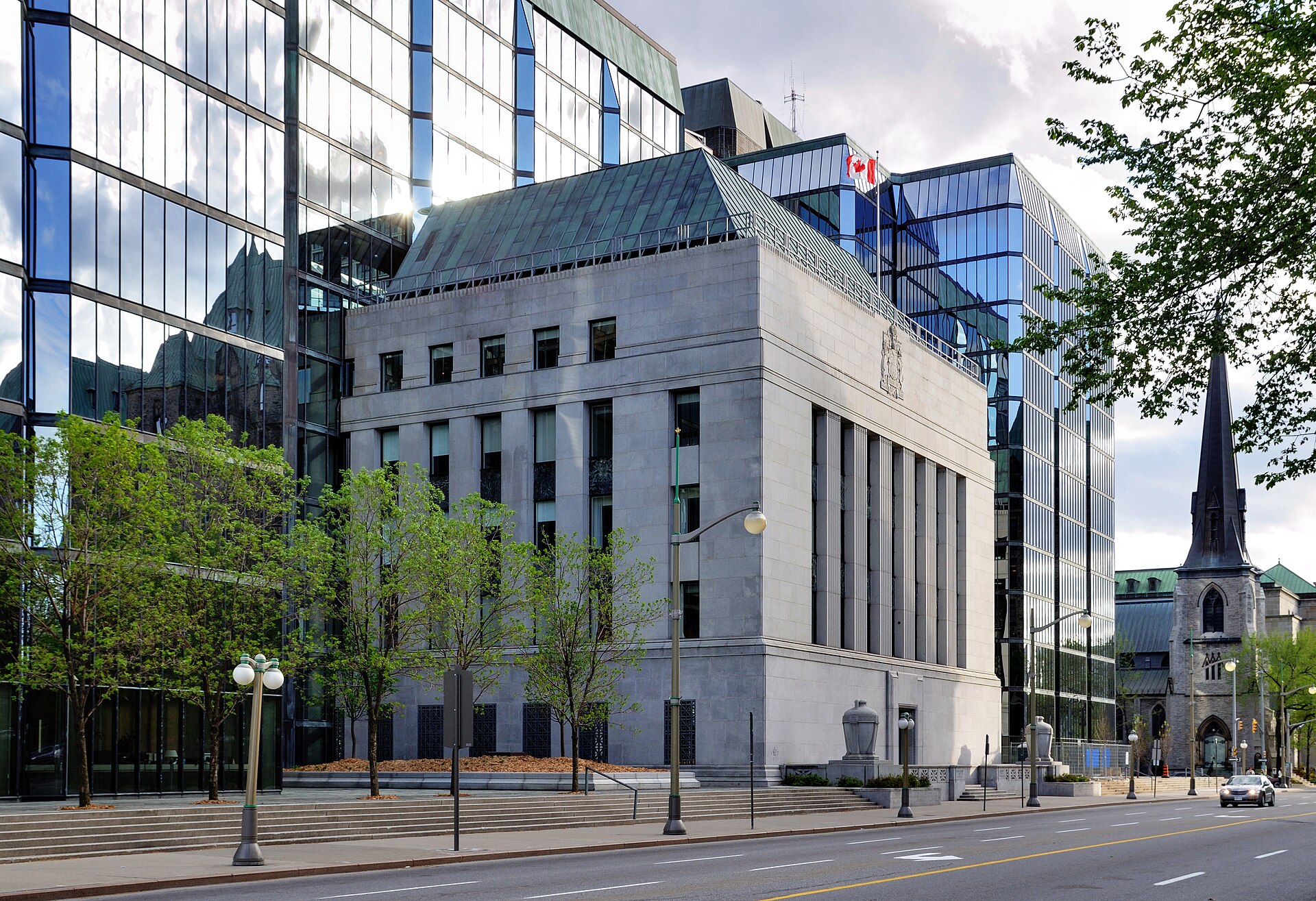
Prime is about 4.45%. Typical advertised 5-year fixed rates are in the mid-4% range, and 5-year variable rates are in the mid-3% range. Your actual rate depends on your lender, down payment, credit and whether your mortgage is insured.
Fixed vs variable mortgage: side-by-side
| Factor | Fixed | Variable |
|---|---|---|
| Starting rate (Sept 2026) | Mid-4% range | Mid-3% range |
| Payment | Same for the whole term | May change with prime |
| Budget certainty | High | Lower |
| If rates fall | You keep your higher rate | Your rate drops |
| If rates rise | You’re protected until renewal | Your cost goes up |
| Typical penalty to break | Greater of three months’ interest or IRD | Usually three months’ interest |
| Stress test | Higher of rate + 2% or 5.25% | Higher of rate + 2% or 5.25% |
What the rate gap means in dollars
On a $600,000 mortgage over 30 years, a payment at 4.5% is about $3,025 a month. At 3.5%, it’s roughly $2,690. That gap of a few hundred dollars a month is what variable borrowers gain today, as long as rates don’t rise.
The penalty factor most buyers overlook
Many Canadians break their mortgage before the term ends, often because they move, refinance or separate. That makes penalties a real cost, not a remote risk.
Fixed mortgages often use an interest rate differential (IRD) calculation, which can be large if rates have dropped since you signed. Variable mortgages usually charge three months’ interest. If there’s a real chance you’ll sell or upsize within a few years, that difference matters.
Bungalow tip: Planning to add a bungaloft or basement suite in a few years? You may want to refinance to fund it. A variable mortgage or a fixed product with fair penalty terms gives you more room to move.
Which should you choose?
A fixed rate may suit you if:
- Your budget is tight and a payment increase would cause stress.
- You value certainty and want to set it and forget it.
- You’re confident you’ll stay in your bungalow for the full term.
A variable rate may suit you if:
- You have room in your budget to absorb a higher payment.
- You might sell, move or refinance before the term ends.
- You’re comfortable watching rates and accepting some uncertainty.
Other options to ask about
Some lenders offer hybrid mortgages that split your balance between fixed and variable. Shorter fixed terms, such as two or three years, are another middle ground. Your mortgage agent can compare them for your situation.
Questions to ask before you sign
- How is the penalty calculated if I break the mortgage early?
- Is this variable product adjustable-payment or fixed-payment?
- Can I convert to a fixed rate during the term, and at what rate?
- What are the prepayment privileges each year?
- Is the mortgage portable if I buy another home?
Frequently asked questions
Is a fixed or variable mortgage better right now?
No one can reliably predict rates. As of September 2026, variable starts lower, while fixed offers certainty. Choose based on your budget, plans and risk tolerance.
Can I switch from variable to fixed?
Many lenders let you convert a variable mortgage to a fixed one during the term, usually without a penalty. Check your mortgage terms.
Do I have to pass the stress test with a variable rate?
Yes. You must qualify at the higher of your contract rate plus 2% or 5.25%, whether you choose fixed or variable.
What happens to my variable payment if the Bank of Canada raises rates?
Lenders usually raise prime. With an adjustable-rate mortgage, your payment rises. With a traditional variable, more of your payment goes to interest until you renew or adjust.
The bottom line on fixed vs variable
There’s no universal winner. Fixed buys peace of mind; variable buys a lower starting rate and flexibility. Model both payments with our mortgage calculators, read our guide on choosing a mortgage agent, and get advice on your full financial picture before you sign. Then browse bungalows for sale with your budget in hand.
The newest bungalows on the market
Fresh listings, updated every 15 minutes.
 $729,900118 Alva Street, Scugog3+1 bed · 2 bath · Port PerryCourtesy of Right At Home Realty
 $449,0003 Perch Lane, Norfolk3 bed · 1 bath · Long PointCourtesy of BOSLEY REAL ESTATE LTD.,
 $1,199,00013 Alpine Way, Oro-Medonte1+3 bed · 3 bath · Horseshoe ValleyCourtesy of RIGHT AT HOME REALTY
 $589,0002631 62 Highway, Prince Edward County3+1 bed · 2 bath · Sophiasburg WardCourtesy of Royal LePage ProAlliance Realty
 $459,90044 Barbara Street, Quinte West3+1 bed · 2 bath · Trenton WardCourtesy of Royal LePage Our Neighbourhood Realty
 $575,00038 Habitant Crescent, Whitby3 bed · 2 bath · Lynde CreekCourtesy of DAN PLOWMAN TEAM REALTY INC.