
A good home theatre setup starts with the right room, then balances screen size, sound and light control. In most bungalows, the finished basement is the best spot because it is darker, quieter and separate from bedrooms on the main floor. Add a large TV or projector, a soundbar or surround system, dimmable lighting and one simple remote or app, and you have a space the whole household will use.
Key takeaways
- The basement is often the ideal bungalow theatre room.
- Match screen size to seating distance, not just budget.
- Sound quality and light control matter as much as the screen.
- Plan wiring before drywall goes up if you are finishing a space.
Choosing the right room in a bungalow
Because all the bedrooms in a bungalow are usually on the main floor, sound travels easily from a living room theatre to someone trying to sleep. A basement adds a floor between the movie and the bedrooms.
| Room | Pros | Cons |
|---|---|---|
| Finished basement | Dark, quiet, separate from bedrooms | May need moisture control and egress planning |
| Living or family room | Easy to use daily; no stairs | Windows add glare; sound reaches bedrooms |
| Spare bedroom or den | Private, easy to darken | Small size limits screen and seating |
| Bungaloft upper level | Separate from main living space | Sloped ceilings can limit speaker and screen placement |
If stairs are a concern for you or a family member, a main-floor den with good blackout blinds may be the better choice.
TV or projector?
Large TV
Modern TVs are bright, sharp and handle daylight well. They are the simplest choice for a room with windows and for everyday watching.
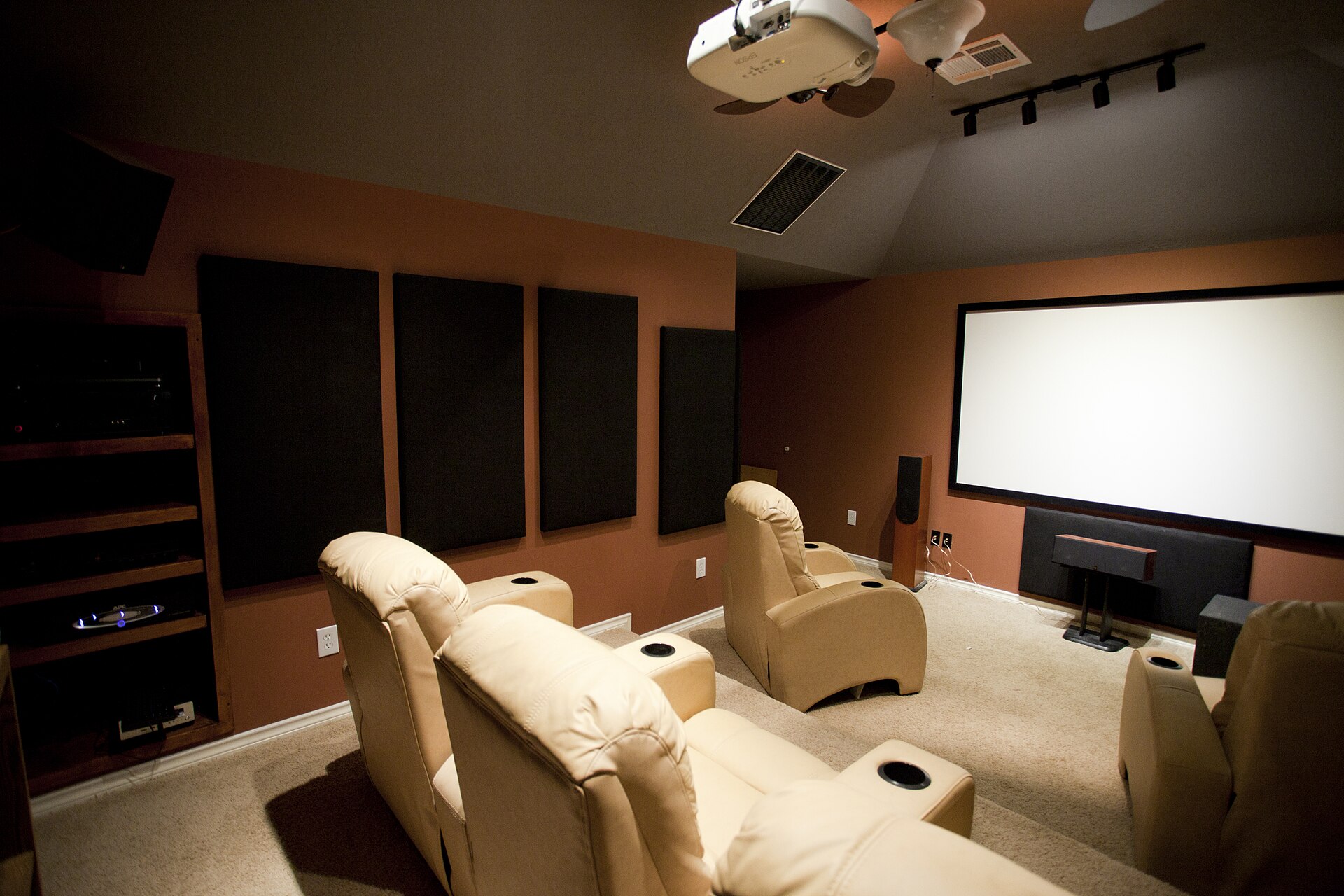
Projector
Projectors give a bigger image for the money but need a darker room. Short-throw models sit close to the wall, which suits narrower basements.
Sizing your screen
- Measure from your main seat to the screen wall.
- Larger screens suit longer distances; very close seating makes a huge screen tiring to watch.
- Check manufacturer viewing-distance guides for the resolution you buy.
- Mount the screen so the centre sits near seated eye level.
Bungalow tip: Many older bungalow basements have lower ceilings and bulkheads around ductwork. Measure ceiling height before choosing a projector mount or riser seating.
Getting the sound right
Sound makes the theatre feel immersive. Your main choices are:
- Soundbar: Simple, tidy and a big step up from TV speakers. Many add a wireless subwoofer.
- Soundbar with rear speakers: Adds surround effects with minimal wiring.
- Receiver with surround speakers: Best performance and flexibility, but more wiring and setup.
- In-wall or in-ceiling speakers: A clean look, best installed during a basement finish.
Keeping sound in the room
Insulation in walls and ceilings, solid-core doors, rugs and fabric seating all reduce how much sound escapes. If you have a basement rental unit or plan one, soundproofing between units matters even more.
Lighting and smart controls
Smart tech turns a basement with a TV into a real theatre.
- Dimmable smart lights: Set a “movie” scene that dims overheads and turns on soft step lighting.
- Bias lighting: A soft strip behind the TV reduces eye strain.
- Smart blinds or blackout curtains: Essential in rooms with windows.
- Universal remote or one app: Fewer remotes mean fewer frustrated family members.
- Voice control: Pause, dim or adjust volume without hunting for the remote.
New to connected devices? Our guide to smart home devices for beginners explains how to choose a platform.
Wiring, networking and comfort
- Run a wired network connection to the TV or streaming device for reliable 4K streaming.
- Add extra outlets and a dedicated circuit if you plan lots of equipment.
- Use conduit in walls so you can upgrade cables later.
- Plan ventilation for equipment cabinets, which can get warm.
- Keep the room comfortable with good heating or a dehumidifier in summer.
Hire a licensed electrician for new circuits and in-wall work. If you are finishing a basement, get permits so the work is documented when you sell.
Bungalow tip: Planning to finish the basement? Our post on adding to a bungalow covers basement finishing as part of a bigger plan.
Seating and layout tips
Comfortable seating keeps people in the room. Sectionals work well in most bungalow basements, while recliners suit dedicated theatre rooms.
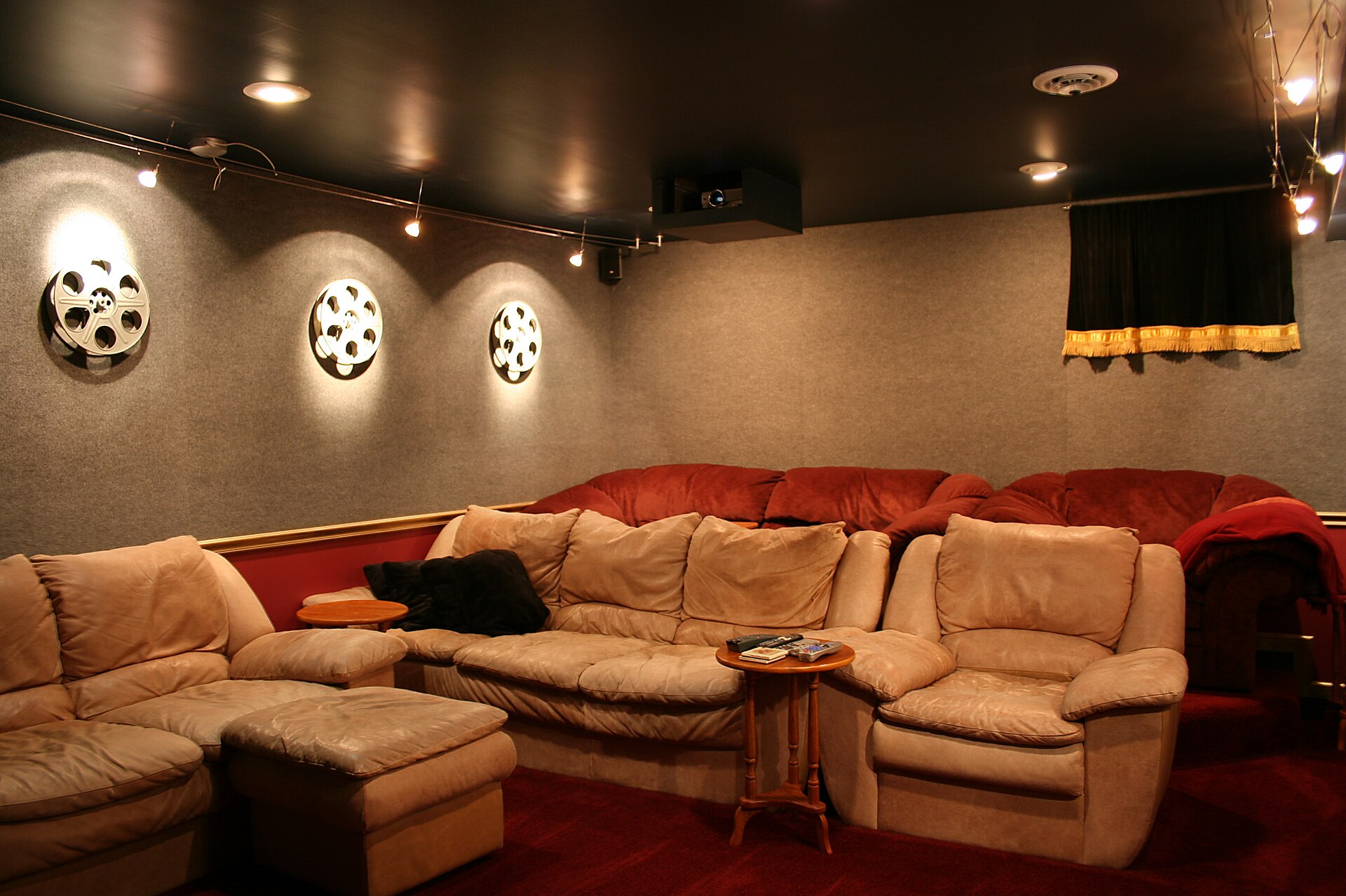
- Leave clear walkways so no one trips in the dark.
- Keep the main seat centred on the screen.
- Add a small riser for a second row only if ceiling height allows.
Common home theatre mistakes
- Buying the biggest screen without measuring seating distance.
- Ignoring windows and glare until after the room is finished.
- Putting the subwoofer under a bedroom wall.
- Relying on weak Wi-Fi for streaming.
- Skipping a plan for hiding cables.
Frequently asked questions
Is a basement the best place for a home theatre?
In most bungalows, yes. Basements are darker and separate from main-floor bedrooms, but they need good moisture control and comfortable heating.
Do I need a permit for a home theatre?
Setting up equipment does not need a permit, but new electrical circuits, walls or a basement finish usually do. Check with your municipality and use licensed trades.
Does a home theatre add value to a home?
A nicely finished basement often appeals to buyers, but specialized theatre equipment rarely adds dollar-for-dollar value. Flexible spaces with good lighting tend to appeal most.
The bottom line on bungalow home theatres
Pick the right room, size the screen to the seating, invest in sound and control the light. Smart controls then make the space easy for everyone to use.
Want a bungalow with a basement ready for movie nights? Browse raised bungalows for sale, which often have bright, high-ceiling lower levels, or set up listing alerts.