
A pre-listing inspection is usually worth it for an older bungalow in today’s market. Buyers are writing inspection conditions again, and a surprise in their report often turns into a price cut after you have accepted an offer. Inspecting first lets you fix, price or disclose problems on your own terms, before a buyer uses them as leverage.
Key takeaways
- GTA conditions are balanced: about 4.6 months of inventory and 98% of list in September 2026.
- A pre-listing inspection is optional, but it reduces renegotiation after an offer.
- Bungalows from the 1950s to 1970s often have the same issues: roofs, wiring, basements and sewer lines.
- Decide item by item whether to fix, offer a credit, or price it in and disclose it.
- Once you know about a serious defect, talk to your lawyer and agent about disclosure.
Why this question matters again in fall 2026
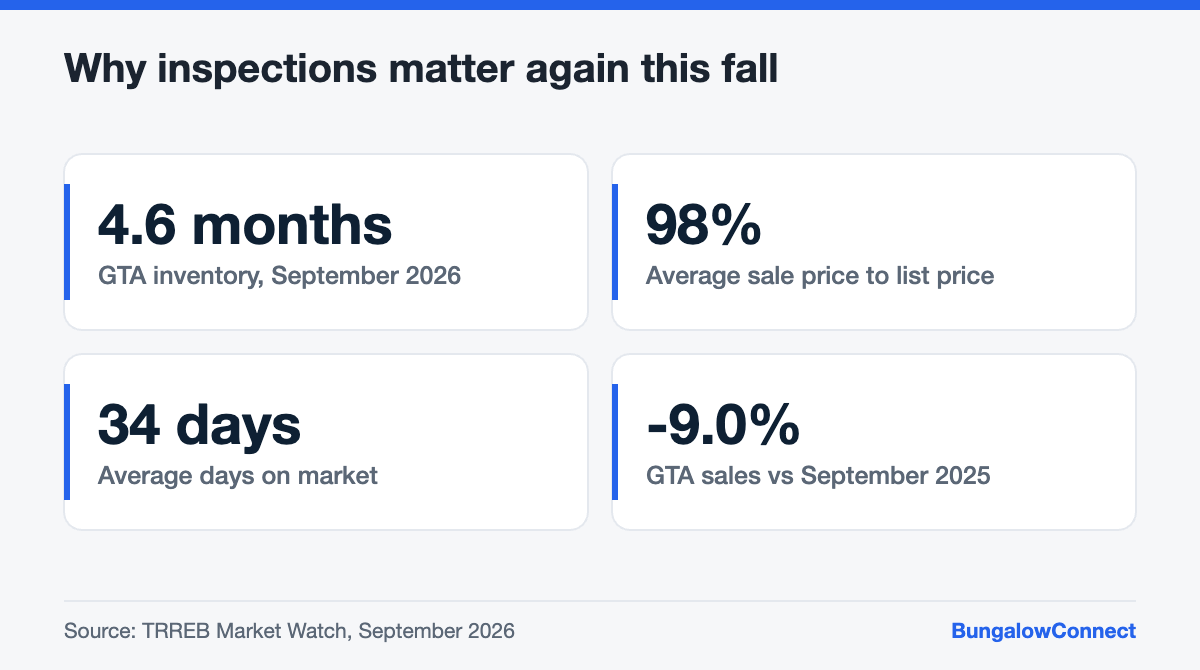
In the bidding-war years, many buyers waived inspections to compete. That is no longer the norm. TRREB’s September 2026 Market Watch showed GTA sales down 9.0% from a year earlier, about 4.6 months of inventory, 34 average days on market and sale prices averaging 98% of list. Buyers have time to inspect, and they use what they find.
The pattern is familiar: you accept an offer conditional on inspection, the buyer’s inspector flags an old roof and an outdated panel, and the buyer asks for a large price reduction or walks away. Your listing goes back on the market as “back on market,” which itself makes the next buyer cautious.
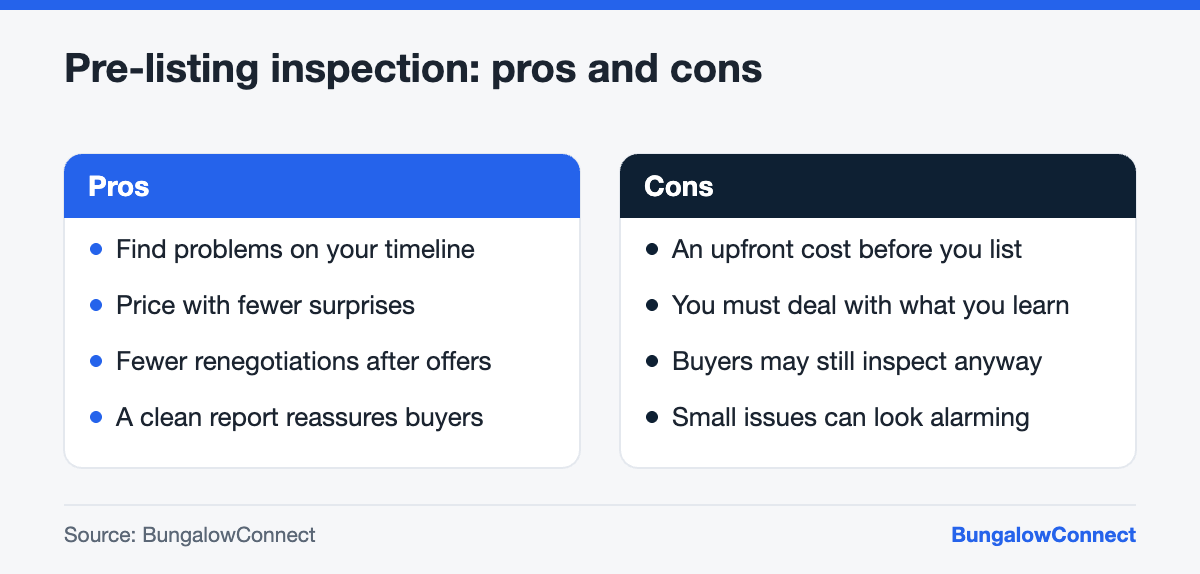
Pre-listing inspection: pros and cons
A pre-listing inspection is simply a full home inspection that you, the seller, commission before the house goes on the market. The inspector works for you, the report belongs to you, and you decide what to do with it. That changes the dynamic. Instead of learning about a problem from a buyer with a deadline and a demand attached, you learn about it with weeks to get quotes, make repairs or adjust your price.
The trade-off is that you pay for the inspection up front, and anything significant it uncovers becomes something you know about. For most sellers of older bungalows, that is a trade worth making.
The case is strongest when the bungalow is older, has not been updated, or is being sold by an estate or a long-time owner who does not know its history. It is weaker for a recently renovated bungalow with permits and receipts for the big items.
One note on inspectors: home inspection is customary in Ontario but not legally required. Ontario passed legislation in 2017 to license home inspectors, but we could not confirm that licensing is in force. Choose an inspector based on experience with older homes, professional association membership and insurance, and ask for a sample report.
What to inspect in an older bungalow
A standard inspection covers the whole house, but in a 1950s to 1970s bungalow, these items decide most negotiations:
| Item | Why it matters in a bungalow | Who to call if flagged |
|---|---|---|
| Roof | A bungalow’s roof covers the whole footprint, so it is a large area relative to the living space | Roofer for a written quote |
| Electrical panel and wiring | Older panels, knob-and-tube or aluminum wiring can affect insurance | Licensed electrical contractor |
| Basement and foundation | Big basements mean more wall area for cracks and moisture | Waterproofing contractor or engineer |
| Sewer lateral | Clay or older pipes under mature trees can be root-damaged | Plumber with a camera scope |
| Attic insulation and ventilation | Affects comfort, ice damming and energy bills | Insulation contractor |
| Furnace and water heater | Age and whether they are owned or rented | HVAC contractor |
For wiring specifically, our guide to knob-and-tube and aluminum wiring explains what insurers ask for. ESA also advises requesting a search of records, which shows any open electrical notifications on the property since 2000; an open notification passes to the buyer, according to its guidance for real estate agents. Close any you find before listing.
Tip: Add a sewer camera scope to your pre-listing inspection if your bungalow is on a street with mature trees. It is one of the few problems a buyer’s inspector may recommend that a standard visual inspection cannot see, and a buyer who discovers a collapsed lateral during conditions has a lot of leverage.
What to do with the report
For each significant finding, pick one of three paths:
- Fix it. Best for safety items and things buyers fear out of proportion to cost, such as a few roof shingles, a double-tapped breaker or a missing handrail. Keep invoices and permits.
- Get a quote and offer a credit. Best for big-ticket items buyers want to choose themselves, such as a full roof or furnace. A written quote anchors the conversation at the real number.
- Price it in and disclose it. Best for issues that buyers of older bungalows expect, like original windows. Your agent can reflect it in the list price so it does not become a second negotiation.
Many sellers share the report with buyers. Buyers may still hire their own inspector, but a clean report, plus receipts for any repairs, tends to shorten that conversation.
A word on disclosure
Once you know about a serious problem, you cannot un-know it. In general, Ontario sellers must not misrepresent a property, and serious hidden defects that a seller knows about can create legal risk if they are not disclosed. Talk to your real estate lawyer and agent about how to handle anything significant the inspection finds. In most cases, fixing it or disclosing it with a quote is the cleaner path.
When you might skip it
- The bungalow was recently renovated with permits, and you have receipts for the roof, windows, furnace and electrical.
- You are selling to a builder for land value, where the house itself is not the point.
- You already have a recent inspection from your own purchase or refinance, and nothing major has changed.
Even then, fix the small items an inspector would flag. Our list of quick upgrades before you sell is a good start, and if you have already listed and showings are slow, see why bungalows are not selling this fall. Estate sellers should also read our guide to selling an inherited bungalow.
Frequently asked questions
Is a pre-listing inspection worth the cost?
For most older bungalows, yes. The fee is modest next to the cost of the major repairs it can uncover, and next to a price cut negotiated under deadline pressure. It lets you price accurately, fix what scares buyers and keep control of the timeline. For a recently renovated home with permits and receipts, the value is smaller.
Do I have to disclose a pre-listing inspection report?
Ontario has no rule requiring you to hand over the report, but you must not misrepresent the property, and known serious hidden defects can create legal risk if they are not disclosed. Most sellers who inspect choose to share the report. Ask your lawyer how to handle anything significant it finds.
Will buyers still do their own inspection?
Many will, especially in a balanced market where they have time. A pre-listing report still helps: it shows you have nothing to hide, and if you have fixed the major items or priced them in, the buyer’s inspection is less likely to produce a renegotiation. Some buyers will rely on your report, but you cannot count on it.
Get your bungalow sale-ready
Start with a home value estimate, then read our sellers’ guide for the full listing plan.
This article is general information as of October 2026, not legal, tax, mortgage or financial advice. Rules and numbers change, so confirm the details for your situation with a licensed professional.