Knob-and-tube and aluminum wiring are both legal in existing Ontario homes, and the Electrical Safety Authority says each can be safe when properly maintained or connected. The practical problem is insurance: ESA says many insurers will not cover homes with knob-and-tube, and some will not insure homes with aluminum wiring without an ESA inspection. For a bungalow buyer, that makes wiring a condition-period issue, not a closing-day surprise.
Key takeaways
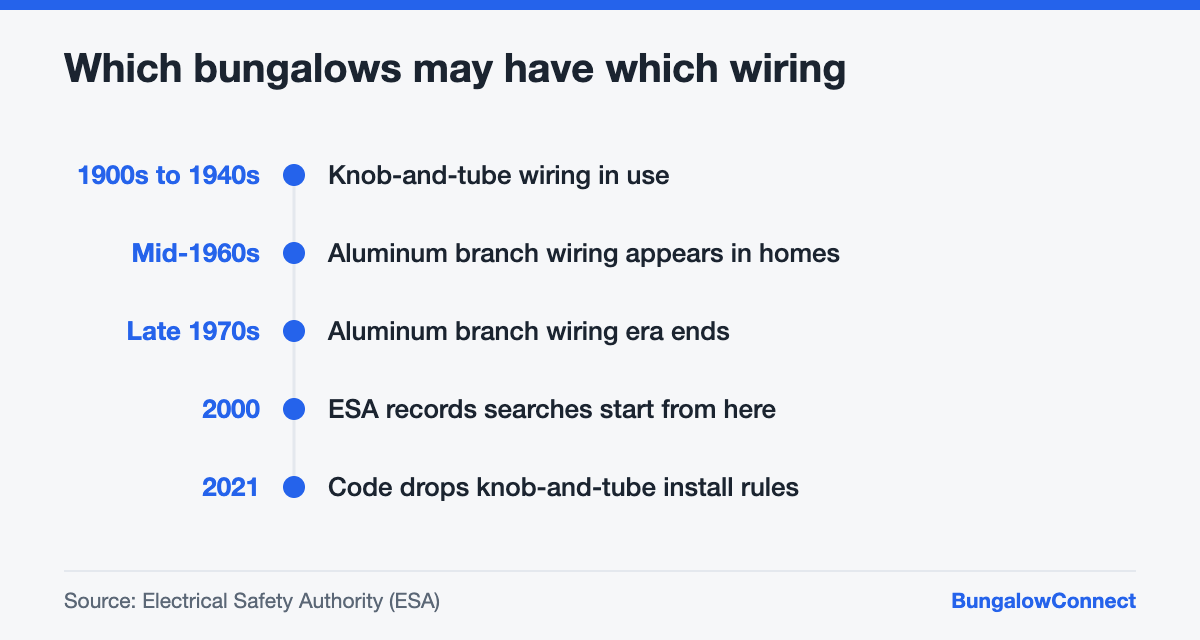
- Knob-and-tube was used from the early 1900s to the 1940s; aluminum branch wiring in many homes built from the mid-1960s to the late 1970s.
- ESA says aluminum wiring is safe when connections are made properly with approved devices.
- Many insurers will not provide or renew coverage on homes with knob-and-tube wiring.
- A home inspection is not an electrical assessment; hire a licensed electrical contractor.
- An ESA search of records shows open permits since 2000, which pass to the new owner.
Which bungalows are likely to have older wiring?
The house’s age is the best first clue. GTA bungalows span several building eras, and each tends to come with its own electrical system:
| Built | Typical bungalows | Wiring to ask about |
|---|---|---|
| 1920s to 1940s | Prewar bungalows in older Toronto and Hamilton neighbourhoods | Knob-and-tube, possibly partly replaced |
| Late 1940s to early 1960s | Postwar brick bungalows across Scarborough, Etobicoke, North York and the inner suburbs | Copper, often with an older or undersized panel |
| Mid-1960s to late 1970s | Raised bungalows, side-splits and back-splits in the suburbs | Aluminum branch wiring in some homes |
| 1980s onward | Newer bungalows and bungalow townhouses | Copper wiring, modern panels |
These are tendencies, not rules. Many prewar homes were rewired long ago, and plenty of 1970s homes were built with copper. Only an inspection tells you what is actually in the walls.
Knob-and-tube wiring: what ESA says
According to ESA’s knob-and-tube page, the method was used in homes from the early 1900s to the 1940s and is no longer used. The 2021 edition of the Ontario Electrical Safety Code removed the rules for installing it, but the Code is not retroactive, so existing systems are not automatically illegal.
ESA says knob-and-tube can be safe if a licensed electrical contractor maintains it, but older systems lack modern protections such as ground fault circuit interrupters in wet areas. It also states plainly that many insurers will not provide or renew coverage on homes with this wiring, and some require replacement first.
Aluminum wiring: what ESA says
ESA’s aluminum wiring page says homes built between the mid-1960s and late 1970s may have aluminum wiring, and that the Ontario Electrical Safety Code still permits it. The key is connections: aluminum wiring is safe when connections and terminations are done correctly without damaging the wire, using only devices approved for aluminum.
ESA’s recommended remedy is for a licensed electrical contractor to assess the system, make any repairs and have ESA inspect the work. Some insurers will not insure or renew without that inspection, and you may need to give the insurer a copy of the ESA Certificate of Acceptance.
Tip: Rewiring a bungalow is usually simpler than rewiring a two-storey house, because an electrician can often reach most walls from the attic above and the basement below. If you love an older bungalow but the wiring needs work, get a written quote during your conditional period and negotiate on the real number.
Buying a bungalow with older wiring
A home inspector will often flag possible knob-and-tube or aluminum wiring, but ESA notes a home inspection does not focus on electrical systems. For a reliable answer, bring in a licensed electrical contractor.
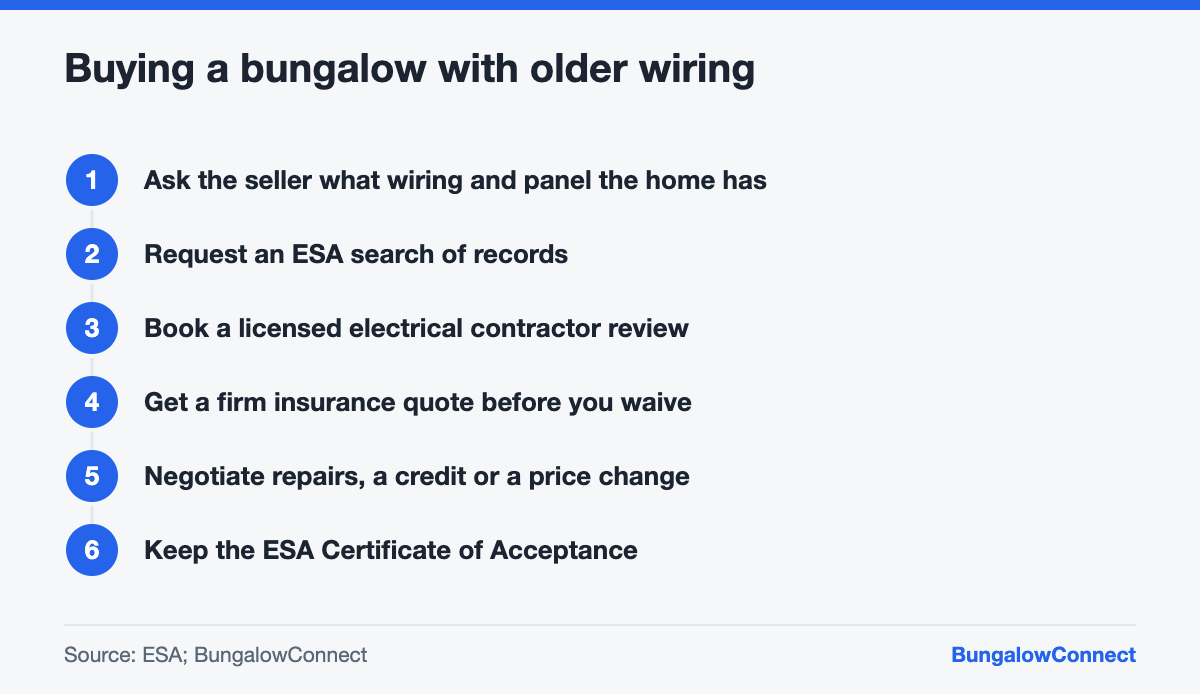
- Ask early. Ask the listing agent what wiring and panel the home has and whether any electrical work was done with permits.
- Search ESA’s records. ESA’s guidance for real estate agents says a search of records shows any open notifications on the property since 2000. An open notification transfers responsibility to the new owner.
- Get an electrical assessment. A licensed electrical contractor can confirm what is there, check for overheating or damaged connections, and price any work.
- Get an insurance quote before you waive conditions. Tell the insurer exactly what the assessment found. If they will not insure until work is done, you need to know now.
- Negotiate. A repair before closing, a price reduction or a credit are all on the table in a balanced market.
Lenders require insurance, so a home you cannot insure is a home you cannot finance. That is why this step matters more than any cosmetic issue. Our guide to what can make or break a bungalow inspection covers the other big-ticket items.
Selling a bungalow with older wiring
If you know your bungalow has knob-and-tube or aluminum wiring, dealing with it before you list removes the buyer’s biggest objection.
- Have a licensed electrical contractor assess the system and fix what is needed, with an ESA notification filed.
- Keep the ESA Certificate of Acceptance; ESA says buyers and insurers may ask for it.
- Check ESA’s records for any open notifications on your property and close them.
- Disclose honestly. Your agent can explain the work and hand buyers the paperwork.
A bungalow that comes with a clean electrical file stands out against dated competition, especially among estate and downsizer listings.
Who can do the work?
ESA is firm on this. Electrical work for hire must be done by a licensed electrical contracting business. General contractors and handypersons are not permitted by law to be hired for electrical work, and ESA says a “master electrician” hired directly is not enough unless the business is licensed. You can verify a contractor with ESA’s online look-up tool.
Homeowners can do their own electrical work in their home, but ESA requires a notification of work (a permit) before starting, even for small jobs, and friends or family cannot do it for you. Rewiring old circuits is not a beginner’s project. For the insurance side, see our article on rising Ontario home insurance costs.
Frequently asked questions
Is knob-and-tube wiring illegal in Ontario?
No. ESA says the 2021 Ontario Electrical Safety Code removed the rules for installing new knob-and-tube wiring, but the Code is not retroactive, so existing systems are not illegal. The bigger issue is insurance, since many insurers will not cover or renew homes with knob-and-tube, and some require it to be replaced first.
Can you get home insurance with aluminum wiring in Ontario?
Often, yes, but terms vary. ESA notes that some insurers will not insure or renew without an ESA inspection, and may require repairs and a copy of the ESA Certificate of Acceptance. Get a quote that reflects the actual wiring before you waive your conditions, and keep the paperwork from any repairs.
Does a home inspection check for knob-and-tube wiring?
A home inspector may spot signs of it in the basement or attic, but ESA points out that a home inspection does not focus on electrical systems. To know what is in the walls and what it will cost to fix, book a licensed electrical contractor during your conditional period.
How do I check for open electrical permits on a house?
Ask ESA for a search of records on the property. ESA says it shows open notifications since 2000, and an open notification transfers to the new owner on closing. Some buyers add a clause making the deal subject to ESA confirming that recent electrical notifications were closed.
Shopping for an older bungalow?
Character bungalows often come with older systems and better prices. Browse fixer-upper bungalows and read our guide to buying an old bungalow before you book showings.
This article is general information as of October 2026, not legal, tax, mortgage or financial advice. Rules and numbers change, so confirm the details for your situation with a licensed professional.