You can buy a bungalow with an illegal basement apartment in Ontario, but price it as a single-family home plus the cost of legalizing the unit, not as a legal two-unit property. The main risks are insurance, a lender that will not count the rent, and a tenant who keeps full rights under the Residential Tenancies Act whether or not the unit is legal. Get the facts on height, exits, fire separation and wiring before your conditions expire.
Key takeaways
- “Illegal” usually means built without permits or not meeting the Building Code and Fire Code, not that zoning forbids it.
- Since 2022, Ontario allows up to three units as of right on most lots with full municipal services.
- A tenant in a non-legal unit generally still has full protection under the Residential Tenancies Act.
- Many lenders and insurers treat a non-legal suite very differently from a legal one.
- Ceiling height, fire separation, escape windows and electrical permits decide what legalizing costs.
What does “illegal basement apartment” actually mean?
On listings you will see wording such as “seller does not warrant the legality of the basement apartment.” That usually means the unit was created without building permits, or nobody knows whether it was. Zoning is less often the problem than it used to be. Since Bill 23 received Royal Assent in November 2022, Ontario has allowed up to three residential units “as of right” on lots in settlement areas with full municipal water and sewer, as the province’s additional residential units notice describes.
So the real question is whether the unit meets the Building Code for a second unit and the Ontario Fire Code, and whether the electrical work was done under an ESA permit. Those are the things that cost money to fix.
The four risks to check before you buy
1. Insurance
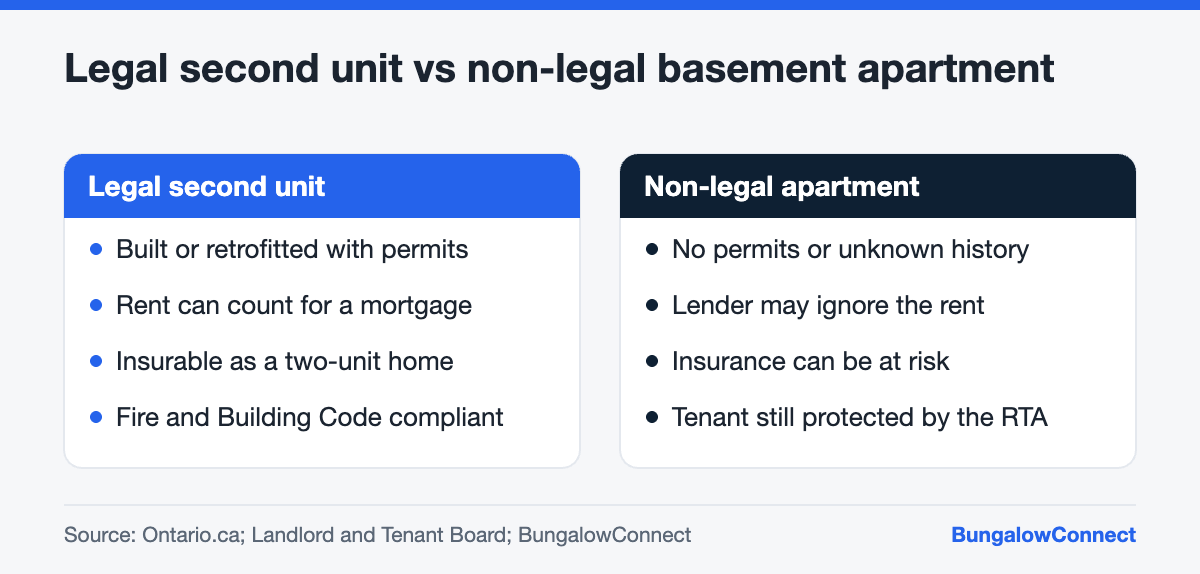
Insurers want to know how a home is used. A rental unit they were not told about can complicate or jeopardize a claim. Tell your insurer exactly what is in the basement, get a written quote that reflects it, and do it before you waive conditions. If the wiring is old as well, see our guide to knob-and-tube and aluminum wiring.
2. Financing
Lenders vary, but many will not count rent from a unit that is not legal, and the appraiser may value the space as a finished basement rather than an apartment. If you need the rent to qualify, you may not get there. Our guide to whether suite rent helps you qualify explains how lenders treat rental income.
3. The tenant
A tenant living in a non-legal unit generally still has the protections of the Residential Tenancies Act. The lease, rent and rights carry on when you buy. You cannot simply ask them to leave because the unit is not legal. The Landlord and Tenant Board’s guide to the Act explains the limited reasons a tenancy can be ended. If you want the unit vacant, that must be dealt with lawfully, often by the seller before closing, and your lawyer should handle the paperwork. Our article on buying a tenanted bungalow covers this in detail.
4. Safety and liability
The rules exist because basement apartments without fire separation, working alarms or a way out are dangerous. Local fire services can inspect and enforce the Fire Code in existing two-unit houses. As the owner, you carry the risk.
Tip: Ask the seller for anything that shows the unit’s history: building permits, a fire inspection report, ESA certificates and the tenant’s lease. Then book a designer or contractor who does second units to walk the basement during your conditional period. One hour with the right person tells you whether legalizing is a weekend of alarms or a lowered floor.
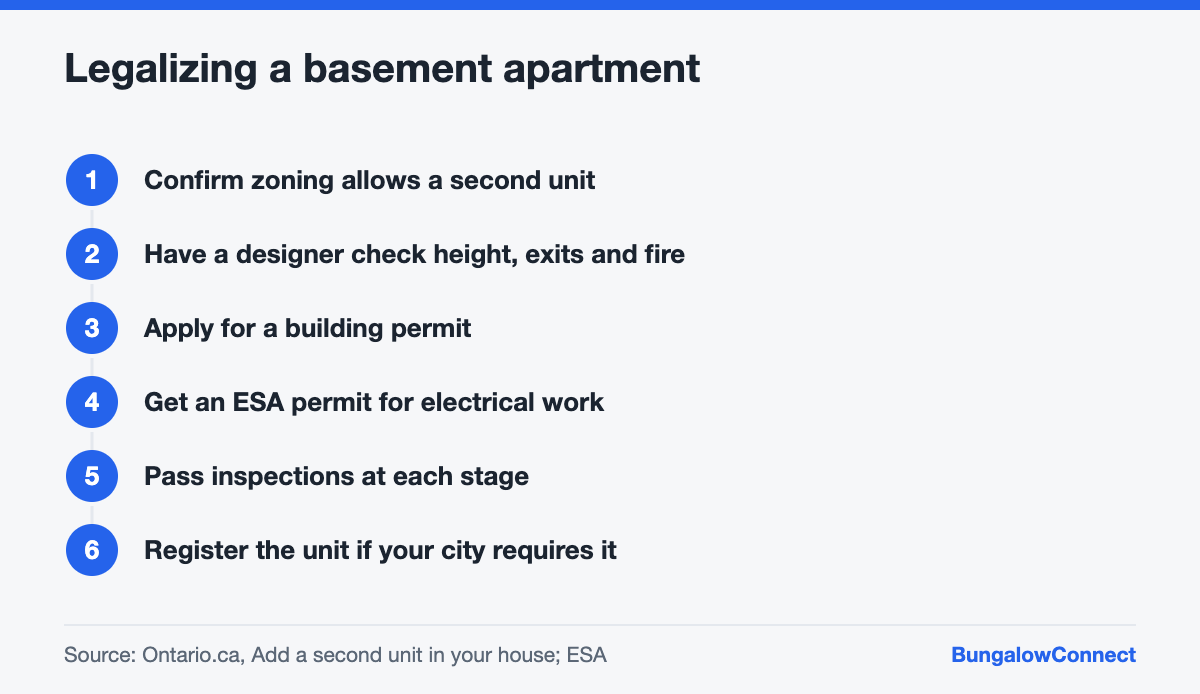
Can you legalize a basement apartment?
Often, yes. Ontario’s guide to adding a second unit summarizes the main requirements for a house more than five years old:
| Requirement | What the guide says | Typical issue in an older bungalow |
|---|---|---|
| Ceiling height | A basement second unit may have 1.95 m over the required floor area and exit route | Low beams and ducts |
| Fire separation | 30 minutes, or 15 minutes with interconnected smoke alarms throughout | Exposed joists or old plaster ceilings |
| Exits | A separate exit is preferred; otherwise a protected shared exit or an escape window | Small basement windows |
| Smoke and CO alarms | Required in specific locations, interconnected | Missing or battery-only alarms |
| Heating | A shared furnace needs a duct smoke detector that shuts it down | Not installed |
| Electrical | Separate ESA permit and inspection | Unpermitted circuits, overloaded panel |
The 2024 Building Code also allows 1.85 m clearance under beams and ducts in a secondary suite. Our guide to basement ceiling height for a legal suite explains how to measure, and our egress window guide covers the exit side. Ontario’s guide also notes that development charges are not collected for a second unit in an existing house.
How to price it into your offer
- Start from the value of the bungalow as a single-family home with a finished basement.
- Get a rough estimate of what legalizing would cost from someone who does second units.
- Add a contingency, because opening walls in an older house tends to find more work.
- Factor in time without rent if the unit must be empty during construction.
- Compare the result with the asking price, and negotiate on the gap.
If the unit cannot realistically be legalized, for example because the ceiling is far too low, value it as family space. Do not pay for rental income you cannot safely or legally collect.
After you buy: registration and tax
Some municipalities, such as Brampton, register two-unit dwellings, and your city may require it after the work passes inspection. Once the unit is legal and rented, think about tax: creating a self-contained unit can affect your principal residence exemption when you sell, as we explain in capital gains on a bungalow with a rented basement.
Frequently asked questions
Is it legal to rent out an illegal basement apartment in Ontario?
Renting a unit that does not meet the Building Code or Fire Code exposes the owner to enforcement and liability, and insurance can be at risk. Even so, the tenant generally keeps full rights under the Residential Tenancies Act. The safest course is to legalize the unit or stop using it as a separate rental once the current tenancy lawfully ends.
How do I know if a basement apartment is legal?
Ask the seller for the building permit and final inspection for the second unit, plus ESA certificates for the electrical work. Your municipality can confirm permit history, and some cities keep a registry of two-unit houses. If no one can produce permits, assume the unit is not legal and price your offer accordingly.
Will a bank give me a mortgage on a house with an illegal suite?
Usually yes, on the house itself, but many lenders will not count the suite’s rent toward your income, and the appraisal may not value the space as an apartment. If you need the rent to qualify, speak with a mortgage agent before you offer and ask how that lender treats non-legal units.
Shop for suite-ready bungalows
Look for bungalows with a separate entrance and good basement height, or browse Brampton bungalows, where two-unit homes are common.
This article is general information as of October 2026, not legal, tax, mortgage or financial advice. Rules and numbers change, so confirm the details for your situation with a licensed professional.