Toronto is generally considered a safe place to live for a city of its size, and it regularly appears on international lists of safe major cities. Still, safety varies from street to street, just like in any big city. The smart move is to research the specific neighbourhood you’re considering, using public data and your own visits.
Key takeaways
- Toronto is often ranked among the safer large cities, but no city is crime-free.
- Safety depends on the block, not just the neighbourhood name.
- Public police data, visits at different times and neighbour chats give the clearest picture.
- Simple home security steps reduce risk wherever you live.
Is Toronto a safe city to live in?
For most residents, daily life in Toronto feels safe. People walk at night, ride transit, and let their kids play in local parks. The city has a large police service, active community groups and lots of public spaces that stay busy.
That said, Toronto has crime like any big city. Property crimes such as car theft and break-ins have been a concern in parts of the GTA in recent years. Being informed, not worried, is the right mindset.
We won’t quote crime rankings here because they change often and depend on how they’re measured. Instead, here’s how to check the facts for yourself.
How to research neighbourhood safety in Toronto
Use public police data
The Toronto Police Service publishes neighbourhood-level crime data online through its public data portal. You can look up reported incidents by type and area, and see trends over time. Other GTA police services, like Peel and York, publish similar data.
When you look at the numbers:
- Compare the area with the city overall, not just with one other neighbourhood.
- Look at the type of crime. Car theft and violent crime are very different concerns.
- Check trends over a few years, not one month.
- Remember that busy commercial areas often show more incidents simply because more people pass through.
Visit at different times
Walk the street on a weekday morning, a weekend afternoon and after dark. Notice lighting, foot traffic, how well homes are kept and whether people are out.
Talk to neighbours
Long-time residents are the best source of local knowledge. Ask what they like, what bothers them and whether anything has changed recently.
Signs of a safe, stable street
| Sign | Why it matters |
|---|---|
| Well-kept homes and yards | Suggests long-term owners who look out for each other |
| Good street lighting | Reduces opportunities for crime after dark |
| People out walking, gardening or playing | More eyes on the street |
| Active community groups or associations | Neighbours share information and organize |
| Low through-traffic | Quieter, safer for kids and pedestrians |
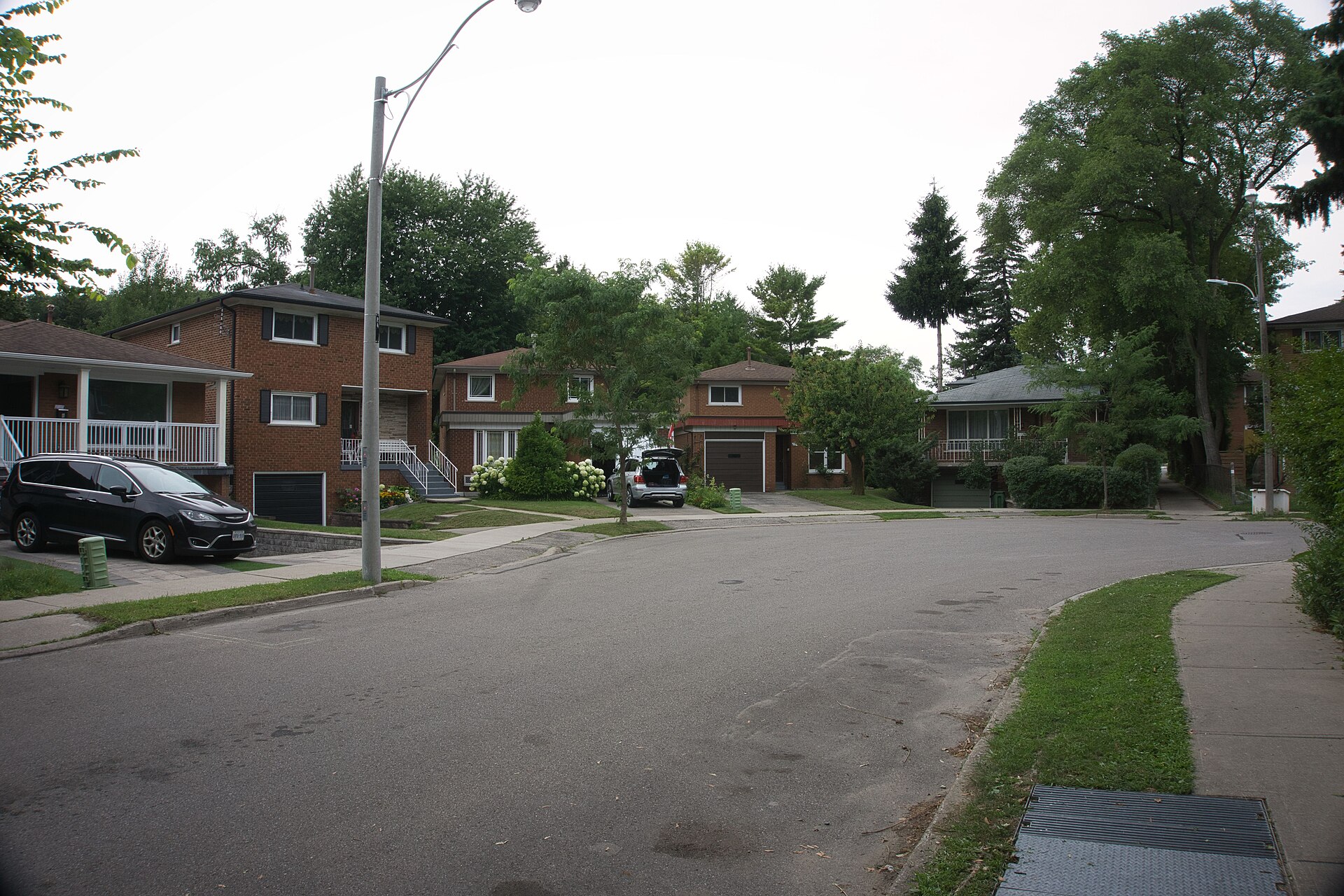
Bungalow streets often check many of these boxes. Mature crescents in Etobicoke, North York and Scarborough tend to have long-time owners and less through-traffic than main roads.
Bungalow tip: Look at the home itself, too. A bungalow with clear sightlines to the street, good exterior lighting and a well-lit driveway is easier to secure. A 2-car garage also keeps vehicles out of sight.
How to keep your Toronto home secure
Wherever you buy, a few basics go a long way:
- Change or rekey every lock when you move in.
- Add motion-sensor lighting at doors and the driveway.
- Install a video doorbell or monitored alarm system.
- Use a steering wheel lock or park in the garage if car theft is a concern locally.
- Keep basement windows secure, especially in bungalows where they’re close to ground level.
- Join a neighbourhood group to stay in the loop.
For a full list, see our bungalow home security checklist.
Questions to ask before you buy
Your Realtor can’t tell you a neighbourhood is “safe” or “unsafe,” since that’s subjective and can’t be promised. But you can ask plenty of useful questions to build your own picture:
- Has the seller had any break-ins, car thefts or insurance claims at the property?
- Is there an active neighbourhood watch, residents’ association or local social media group?
- Are there any planned developments, road changes or transit projects nearby?
- What are the home insurance quotes like for this address?
That last question is a practical one. Insurance pricing reflects claims history in an area, so getting a quote from an insurance broker before you firm up an offer can flag concerns early. It also helps you budget accurately.
Finally, trust your instincts. If a street doesn’t feel right after a few visits, keep looking. There are plenty of quiet bungalow neighbourhoods across the city and the GTA.
Safety beyond crime: other things to check
Feeling safe is about more than crime. Before you buy, also think about:
- Traffic safety: sidewalks, crossing guards and speed on your street.
- Flood risk: low-lying areas and homes near ravines may need extra protection.
- Emergency services: distance to the nearest fire station and hospital.
- Walkability: well-lit routes to transit and shops.
Our guide on how to evaluate walkability covers what to look for on foot.
Frequently asked questions
Is Toronto safe at night?
Most Toronto neighbourhoods are busy and well lit in the evening, and many residents walk and take transit at night. As in any city, stick to well-lit routes and stay aware of your surroundings.
Where can I find crime data for a Toronto neighbourhood?
The Toronto Police Service shares neighbourhood crime data through its online public data portal. Peel, York, Durham and Halton police services offer similar tools for their areas.
Are the suburbs safer than downtown Toronto?
Not always. Every area has its own patterns, and suburban areas can see more property crimes like car theft. Check the data for the exact neighbourhood you’re considering.
The bottom line
Toronto is generally a safe city to live in, but safety is local. Research the exact area, visit at different times and talk to people who live there.
When you’re ready to look, browse Toronto bungalows and shortlist streets that feel right to you in person.
Bungalows for sale in Toronto right now
Live listings from the area this article covers.
 $1,500,00097 Estelle Avenue, Toronto3+4 bed · 7 bath · Willowdale EastCourtesy of RE/MAX REALTRON REALTY INC.
 $699,0007 Twenty Second Street, Toronto3+3 bed · 3 bath · Long BranchCourtesy of RE/MAX PREMIER INC.
 $945,000257 John Tabor Trail E, Toronto3+2 bed · 2 bath · MalvernCourtesy of RE/MAX ATRIUM HOME REALTY
 $1,145,000109 Gulliver Road, Toronto4 bed · 3 bath · Brookhaven-AmesburyCourtesy of RE/MAX REALTY SPECIALISTS INC.
 $1,398,80074 Navaho Drive, Toronto3+4 bed · 3 bath · Pleasant ViewCourtesy of HOMELIFE LANDMARK REALTY INC.
 $2,990,00061 Highland Crescent, Toronto2+1 bed · 2 bath · Bridle Path-Sunnybrook-York MillsCourtesy of RE/MAX REALTRON BARRY COHEN HOMES INC.