A ravine lot is a residential property that backs onto a ravine, valley, creek corridor or protected woodland instead of another house. You get privacy, mature trees and green views, but you also accept building limits set by the local conservation authority and the city. This guide explains how ravine lots work in Ontario and what to check before you buy one.
Key takeaways
- A ravine lot backs onto protected natural land, so nobody can build behind you.
- Part of the lot may fall inside a regulated area where permits are needed.
- Ravine homes often sell at a premium and attract strong buyer interest.
- Slope stability, drainage and tree rules are the big things to check.
- Get a survey and ask the conservation authority about the lot before you firm up.
What does “ravine lot” mean in real estate?
In a listing, “ravine lot” means the back of the property meets a natural valley rather than a neighbour’s fence. The ravine is usually public land, a park or a protected corridor along a creek or river.
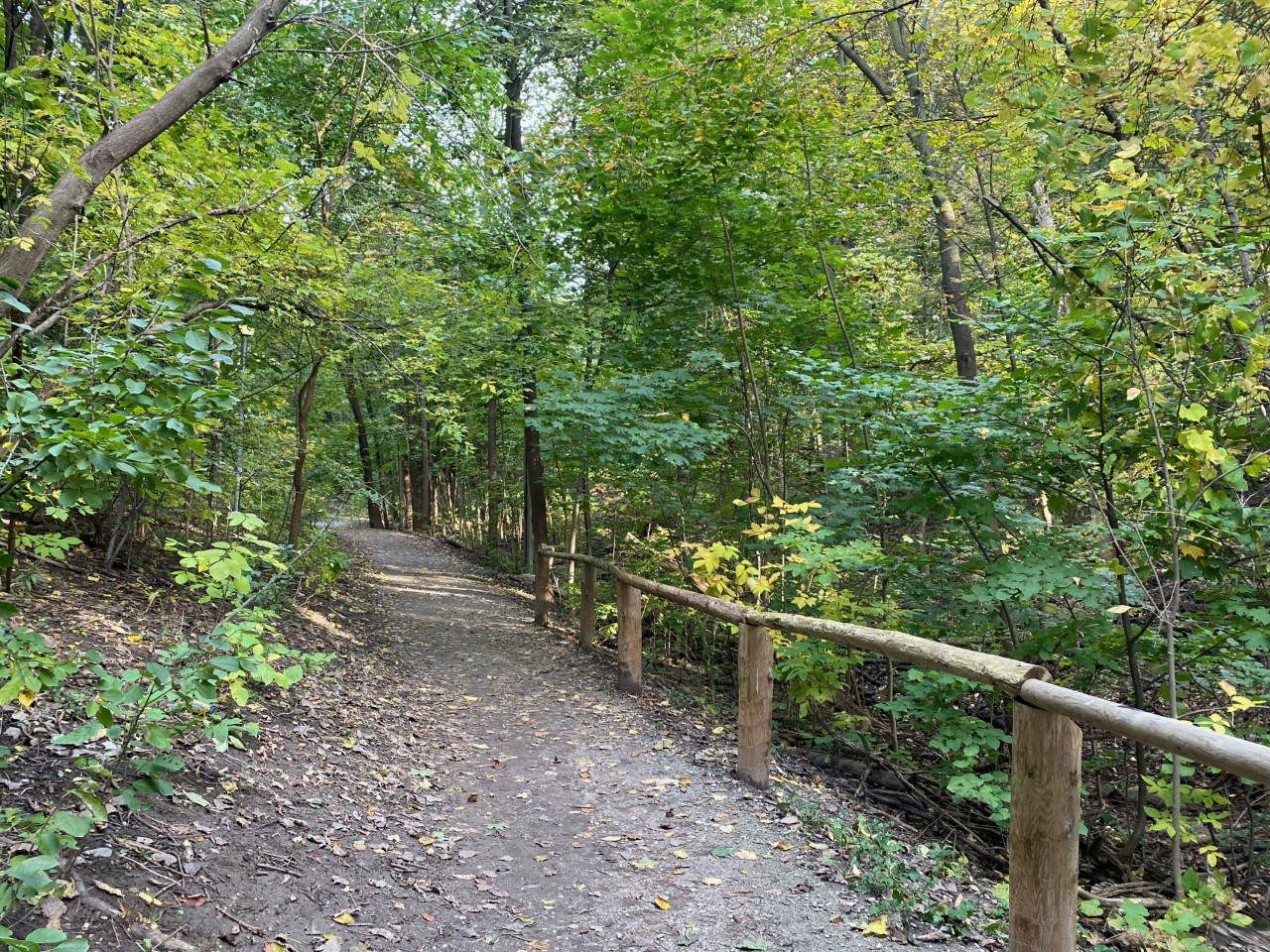
Toronto is famous for its ravine system, but you’ll find ravine lots across the GTA. Think of the valleys along the Credit River in Mississauga, the Humber and Don systems, Etobicoke Creek in Brampton, and creek corridors in Vaughan, Oshawa and Hamilton.
Not every listing that says “ravine” is the same. Some homes have a steep wooded drop at the back. Others have a gentle slope and a view of a trail. A few simply back onto a small strip of green space. Always look at the lot in person and on the survey.
Why do buyers pay more for ravine lots?
Ravine homes tend to draw strong interest because the supply is fixed. Nobody can build a new subdivision behind them. Here’s what buyers usually love:
- Privacy. No rear neighbours looking into your kitchen or yard.
- Views and light. Mature trees and open sky change with every season.
- Nature at the back door. Birds, wildlife and, often, trail access close by.
- Quiet. The trees and valley soften traffic noise.
- Walkout potential. A sloped lot often allows a walkout basement, which suits a raised bungalow or backsplit very well.
That combination is why ravine bungalows are popular with downsizers who want a calm, one-level home. If that appeals to you, browse luxury bungalows for sale, where ravine settings come up often.
What rules apply to a ravine lot in Ontario?
This is the part many buyers miss. A ravine lot is often partly inside an area regulated by a conservation authority, such as Toronto and Region Conservation Authority or Credit Valley Conservation.
Conservation authority regulations
Conservation authorities control development near valleys, slopes, wetlands and flood plains. If you want to build an addition, a deck, a pool or even move a lot of soil, you may need their permission. They can also require you to stay a set distance back from the top of the slope.
Tree and ravine protection by-laws
Many cities protect trees on and near ravines. In Toronto, for example, a ravine protection by-law can require a permit before you cut, injure or remove trees, or change the grade. Fines for breaking these rules can be serious.
Zoning and your future plans
If you hope to add a garden suite or a second storey later, the ravine rules may limit where and how big you can build. Check zoning and conservation rules before you assume a big lot means big options.
Bungalow tip: Planning a pool or rear addition on a ravine bungalow? Make your offer conditional on confirming with the conservation authority and the city that your plan is likely to be allowed.
Ravine lot pros and cons at a glance
| Pros | Cons |
|---|---|
| No rear neighbours and more privacy | Permits may be needed for decks, pools and additions |
| Green views and mature trees | Usable yard can be smaller than the lot size suggests |
| Strong buyer demand at resale | Higher purchase price than similar homes nearby |
| Walkout basement potential | More leaves, more pests and possible erosion |
| Quiet setting and trail access | Trail users may pass close to your back fence |
What should you check before buying a ravine home?
A ravine lot deserves a little more homework than a typical suburban yard. Use this checklist with your agent, lawyer and home inspector.
- Get the survey. See where the property line is and how much of the lot is flat and usable. Learn more in our guide to frontage vs depth and reading lot sizes.
- Ask about regulated areas. Contact the local conservation authority to see whether the lot is regulated and what that means for your plans.
- Look at the slope. Signs of erosion, leaning fences, cracked retaining walls or tilting trees can point to slope movement.
- Check drainage and the basement. Look for water stains, efflorescence, a working sump pump and proper grading away from the house.
- Review trees near the house. Large trees over the roof are lovely but can mean more roof and gutter work. Ask an arborist if you’re unsure.
- Call your insurance broker. Some ravine and flood-prone areas affect home insurance options or water coverage. Get a quote before you firm up.
- Check for easements. Utility or municipal access rights sometimes run along ravine edges.
A thorough home inspection is especially worth it here, since moisture and grading issues are more common on sloped lots.
Is a ravine lot a good investment?
Ravine homes often hold their appeal well because the setting can’t be copied. Buyers who want privacy and nature usually have few choices in any one neighbourhood.
Still, no lot type guarantees a gain. The price you pay, the condition of the home and the usable yard all matter. A ravine bungalow with a steep, unusable backyard may appeal to fewer families than one with a flat yard and a view beyond it. Compare recent sales of similar homes with your agent before you set your offer price.
Frequently asked questions
Can you build a pool on a ravine lot?
Sometimes, but not always. If the pool area falls in a regulated zone, you’ll need approval from the conservation authority and the city, and they may say no near the slope.
Do ravine lots flood?
Most ravine homes sit above the valley floor and never flood, but homes low in a valley or near a creek can be at higher risk. Ask about flood plain mapping and talk to your insurance broker.
Can I cut down trees on my ravine lot?
Often you’ll need a permit first, especially in Toronto and other cities with ravine or tree protection by-laws. Check with your city before removing or pruning large trees.
Who owns the ravine behind my house?
It’s usually owned by the city, a conservation authority or another public body. Your survey will show exactly where your land ends.
The bottom line on ravine lots
A ravine lot gives you privacy, nature and a view that’s hard to find in the GTA. In exchange, you accept rules about trees, slopes and building, plus a bit more upkeep.
If you go in with a survey, clear answers from the conservation authority and a good inspection, a ravine bungalow can be a wonderful place to live. Set up new-listing email alerts so you hear about ravine bungalows as soon as they hit the market.
Bungalows for sale in Toronto right now
Live listings from the area this article covers.
 $699,0007 Twenty Second Street, Toronto3+3 bed · 3 bath · Long BranchCourtesy of RE/MAX PREMIER INC.
 $945,000257 John Tabor Trail E, Toronto3+2 bed · 2 bath · MalvernCourtesy of RE/MAX ATRIUM HOME REALTY
 $1,145,000109 Gulliver Road, Toronto4 bed · 3 bath · Brookhaven-AmesburyCourtesy of RE/MAX REALTY SPECIALISTS INC.
 $1,398,80074 Navaho Drive, Toronto3+4 bed · 3 bath · Pleasant ViewCourtesy of HOMELIFE LANDMARK REALTY INC.
 $2,990,00061 Highland Crescent, Toronto2+1 bed · 2 bath · Bridle Path-Sunnybrook-York MillsCourtesy of RE/MAX REALTRON BARRY COHEN HOMES INC.
 $1,299,00085 Pegasus Trail, Toronto4+2 bed · 3 bath · WoburnCourtesy of iCloud Realty Ltd.