
Bungalow home staging works best when you treat the main floor as one connected space and the basement as a second home. Open up sightlines from the front door, brighten the darker centre of the house, show every bedroom’s purpose and give the lower level a clear use. Here’s how to stage each part of a bungalow for the buyers most likely to want it.
Key takeaways
- Buyers see most of a bungalow’s main floor in one walk, so flow and sightlines matter.
- Bungalows can be dark in the middle; layer lighting to fix that.
- Stage the basement with a clear purpose, such as a family room or in-law suite.
- Tailor staging to your likely buyers: downsizers, families or investors.
Why staging a bungalow is different
In a two-storey home, buyers move from floor to floor and see each level fresh. In a bungalow, the front door often reveals the living room, dining area and kitchen at once. That first view sets the tone.
Bungalows also tend to have modest room sizes, a long bedroom hallway and a basement that can be as large as the main floor. Good staging makes the main floor feel open and easy, then shows that the lower level adds real living space.
Stage for the buyers you’re likely to attract
| Buyer group | What they want to see | Staging focus |
|---|---|---|
| Downsizers | Easy living, low upkeep, comfort | Calm, uncluttered rooms and an inviting primary suite |
| Young families | Space for kids and a usable yard | Kids’ bedroom, basement playroom and a family-friendly backyard |
| Multigenerational households | Privacy for two generations | Basement set up as a bright in-law suite |
| Investors | Income potential | Separate entrance, clear basement layout, permit paperwork on hand |
Not sure who your buyers will be? Our guide to what buyers look for in a bungalow can help you decide.
Main floor: create flow and light
Open the sightlines
Stand at the front door and look in. Remove any furniture that blocks the view through to the kitchen or the back windows. Float the sofa away from the walls if it creates a natural walkway.
Brighten the centre
Many bungalows have bright front and back rooms with a darker middle. Fix it with:
- Brighter bulbs in a consistent warm-white tone
- Table and floor lamps in dim corners
- A large mirror opposite a window
- Light, sheer window coverings instead of heavy drapes
- Light, neutral paint in hallways
Simplify the kitchen
Clear counters except for one or two simple items. If the kitchen is dated, focus on clean, bright and well-lit rather than renovating.
Bedrooms: show a purpose for every room
Stage the primary bedroom with a well-sized bed, matching side tables and lamps. Buyers want to see it fits a large bed with room to move.
A third bedroom is a big selling point. If you use it for storage, stage it as a home office or guest room. Downsizers love a den; families want to see a child’s room.
Bungalow tip: Leave the bedroom hallway completely bare, apart from good lighting. A clear, bright hallway makes the whole main floor feel larger and calmer.
The basement: your second selling floor
In many bungalows, the basement is half the home. Give it a clear identity:
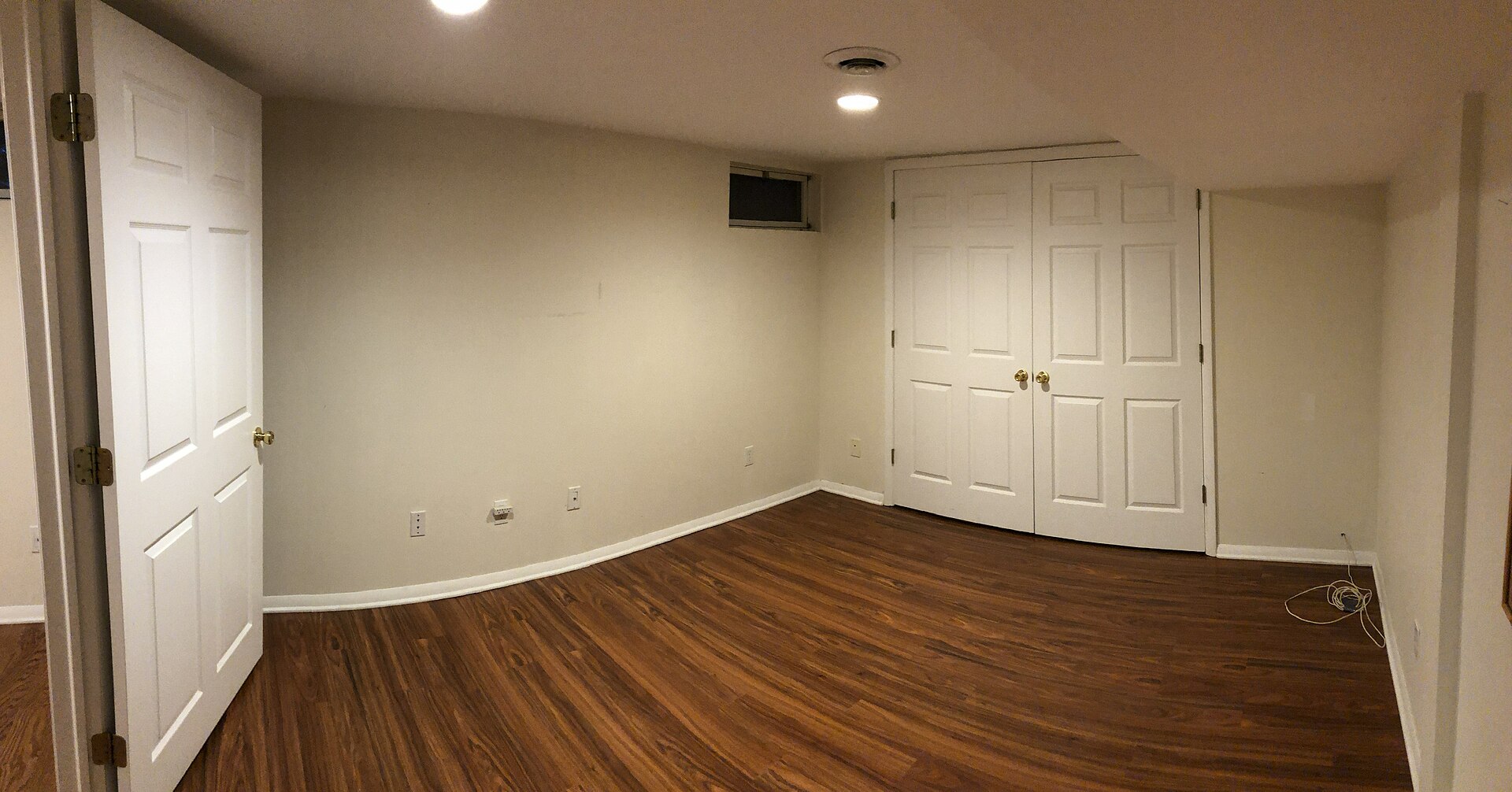
- Family or rec room with a sofa, rug, lamps and a TV area.
- Guest or in-law suite with a made bed, bedside lamp and a clean bathroom.
- Home office or gym for buyers who work from home.
Clean the furnace room, organize storage and run a dehumidifier before showings so the space smells fresh. If you have a separate entrance or legal unit, make sure buyers notice it.
Outside: curb appeal and the backyard
Bungalows have low, wide fronts, so the entrance and landscaping carry the first impression. Paint or replace the front door, add fresh planters, trim shrubs below window height and light the walkway.
In the backyard, set up a simple seating area on the patio or deck, cut the lawn and tidy garden beds. For more ideas, read our tips on bungalow front yard landscaping.
Bungalow staging mistakes to avoid
- Oversized furniture. A sectional built for a big family room can swallow a bungalow living room. Swap in smaller pieces.
- Ignoring the basement. A cluttered or musty lower level makes buyers subtract space in their heads.
- Blocking windows. Keep furniture and heavy curtains away from glass so light can reach the centre of the home.
- Too many small rugs. They chop up a one-level floor. Use fewer, larger rugs to define zones.
- Staging for yourself. Your taste matters less than what your likely buyers want to see.
Frequently asked questions
Is professional staging worth it for a bungalow?
Often, yes, especially for vacant or estate homes. A stager can show how rooms work and make a modest space feel larger.
Should I stage a vacant bungalow?
Staging at least the living room, kitchen, primary bedroom and basement helps buyers judge size and use. Empty rooms often look smaller than they are.
How do I stage a dated bungalow?
Focus on cleaning, decluttering, lighting and paint. Buyers expect older bungalows to need some updates, but they want to see a well-cared-for home.
Should I show accessibility features when staging?
Yes. Downsizers notice details like a no-step entry, wide doorways and a walk-in shower. Keep those areas clear and mention them in the listing.
The bottom line
Great bungalow staging shows buyers easy flow on the main floor, bright and purposeful rooms and a basement that adds real value. Stage for the buyers you’re most likely to attract.
If you’re still living in the home, use our guide to staging while you live there. Ready to set your price? Get a free home evaluation.