
Colour psychology in interior design is the idea that colours change how a room feels: blues and greens tend to feel calm, warm tones feel energetic, and soft neutrals feel open. In a bungalow, where most rooms connect on one level, choosing colours that flow together matters as much as the mood of each room. Here’s how to pick paint that looks good and feels right.
Key takeaways
- Colour reactions are personal, so treat the “rules” as starting points.
- Light direction changes how every paint colour looks.
- Use a connected palette across a one-level home.
- Calm colours suit bedrooms; warmer tones suit social spaces.
- Go neutral and fresh if you plan to sell soon.
How colour affects the way a room feels
Colour psychology isn’t an exact science. People react to colour based on culture, memories and personal taste. Still, some patterns are widely used by designers.
| Colour family | How it often feels | Good rooms for it |
|---|---|---|
| Blue | Calm, cool, restful | Bedrooms, bathrooms, offices |
| Green | Balanced, natural, fresh | Kitchens, living rooms, sunrooms |
| Warm neutrals (beige, greige) | Cozy, easy-going | Living and dining areas, hallways |
| White | Clean, bright, open | Small rooms, kitchens, trim |
| Yellow | Cheerful, sunny | Breakfast nooks, laundry rooms |
| Red and terracotta | Warm, social, energetic | Dining rooms, accent walls |
| Charcoal and navy | Dramatic, grounded | Feature walls, dens, cabinetry |
Use this as a guide, then test real samples in your own home.
Why light matters more than the paint chip
The same paint can look very different depending on the light. This is the step most people skip.
- North-facing rooms get cooler, bluer light. Warm colours help balance them.
- South-facing rooms get bright, warm light most of the day. Cooler colours stay fresh.
- East-facing rooms are bright in the morning and dimmer later.
- West-facing rooms glow warm in the late afternoon.
Many older bungalows have small windows and deep roof overhangs. Interior hallways can be quite dark. A lighter colour with a warm undertone usually keeps those spaces from feeling gloomy.
Bungalow tip: Paint large sample boards and move them around the room for a few days. Check them in the morning, at dusk and under your lamps at night.
Picking colours for each bungalow room
Living room
This is where you relax and host. Warm neutrals, soft greens or muted blues work well. If the room is big and bright, a deeper colour can add coziness.
Kitchen
Kitchens look best clean and bright. White, soft green and pale grey pair well with wood and stone. Add colour through cabinets, an island or a backsplash.
Bedrooms
Choose restful shades like soft blue, sage, muted lavender or warm grey. Avoid very bright, saturated colours on all four walls.
Bathroom
Bathrooms are small, so light colours help. Spa-like blues and greens are popular. Check how the colour looks under your vanity lights.
Home office
Greens and blues are often chosen for focus. Avoid colours that make you feel sleepy or distracted.
Creating flow in a one-level home
In a bungalow you often see several rooms at once. A random mix of colours can make the home feel choppy.
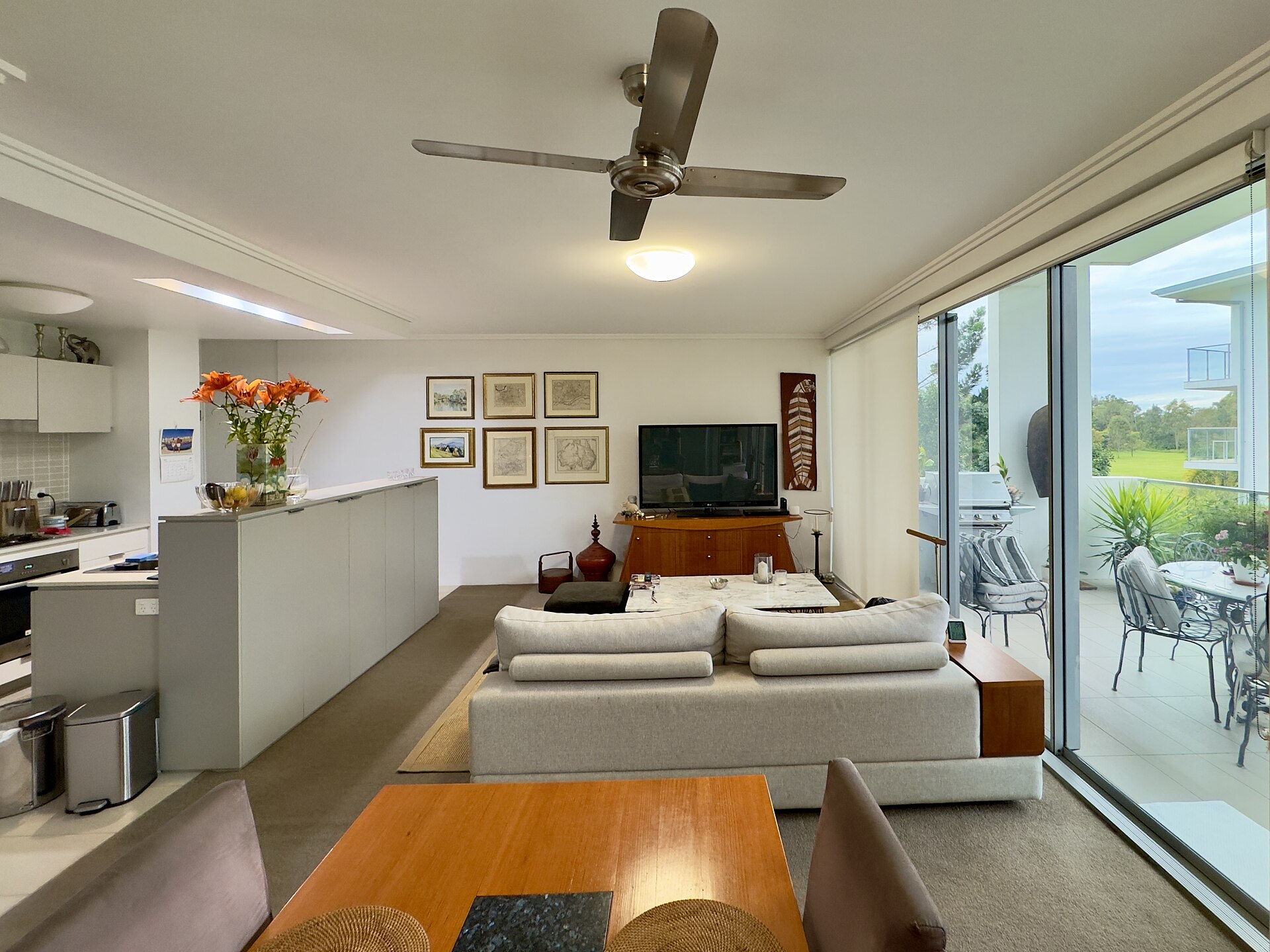
- Pick one main neutral for hallways and connected spaces.
- Choose two or three accent colours that share a similar undertone.
- Use the same trim and ceiling white throughout.
- Put stronger colours in rooms with doors, like bedrooms and the office.
Watch the undertones
Every neutral has an undertone: pink, yellow, green, blue or violet. Undertones explain why a “grey” can look purple next to your oak floors. Hold samples against your flooring, counters and fabrics before you choose.
Choose the right sheen
Finish changes how colour reads. Flat and matte finishes hide wall flaws and look soft, which suits older plaster walls. Eggshell is a good middle ground for living areas. Use satin or semi-gloss in kitchens, bathrooms and on trim, where you need to wipe surfaces clean.
Ceilings also count. A bright flat white ceiling bounces light back into the room. In a bungalow with standard ceiling heights, that small detail can make rooms feel taller.
For more on making a small home feel larger, see our small bungalow design ideas.
Colour choices when you’re selling
When you list a home, buyers need to picture their own life in it. Bold colours can distract them.
- Repaint bright or dark rooms in a soft, warm neutral.
- Fix scuffs and patch holes before painting.
- Keep the palette consistent so photos look cohesive.
- Leave the front door as your one pop of colour.
Our seller’s guide covers other ways to prepare. You can also get a free home evaluation to see where your home stands.
Frequently asked questions
What colour makes a small bungalow look bigger?
Light colours like warm white, pale grey or soft greige reflect more light and make rooms feel larger. Painting walls and trim in similar tones helps too.
What is the most calming colour for a bedroom?
Soft blues and greens are popular choices for bedrooms because many people find them restful. Muted, greyed-down versions work better than bright ones.
Should every room in a bungalow be the same colour?
No, but the colours should relate. Use one main neutral for shared spaces and a few coordinated accent colours for individual rooms.
Is colour psychology backed by science?
Some research suggests colour can influence mood, but reactions vary a lot between people. Treat it as a helpful guide rather than a firm rule.
The bottom line on colour
Start with how you want each room to feel, then test colours in your own light. Keep a connected palette so your one-level home flows from room to room.
Paint is one of the cheapest ways to change how a home feels. It’s worth taking your time.
The newest bungalows on the market
Fresh listings, updated every 15 minutes.
 $829,90019 Palton Avenue, Kanata3 bed · 2 bath · 9008 - Kanata - Morgan's Grant/South MarchCourtesy of ROYAL LEPAGE TEAM REALTY
 $825,000353 County 25 Road, Greater Napanee3 bed · 2 bath · 58 - Greater NapaneeCourtesy of RE/MAX HALLMARK FIRST GROUP REALTY LTD. , BROKERAGE
 $1,500,00097 Estelle Avenue, Toronto3+4 bed · 7 bath · Willowdale EastCourtesy of RE/MAX REALTRON REALTY INC.
 $450,0004925 SAINT CLAIR Avenue, Niagara Falls1 bath · 210 - DowntownCourtesy of RE/MAX Real Estate Centre Inc
 $949,99918 Highland Park Drive, Hamilton3+1 bed · 2 bath · DundasCourtesy of SUTTON GROUP - SUMMIT REALTY INC.
 $749,000173 Woodhaven Place, Hamilton4 bed · 2 bath · RushdaleCourtesy of RE/MAX EXCEL TITAN